What is She Writing?
Case Note #001 — Megan Lions
One of the questions I’m often asked—or at least the one I’m convinced is running through my people’s minds is,
“What is she writing about me?”
I see the curiosity.
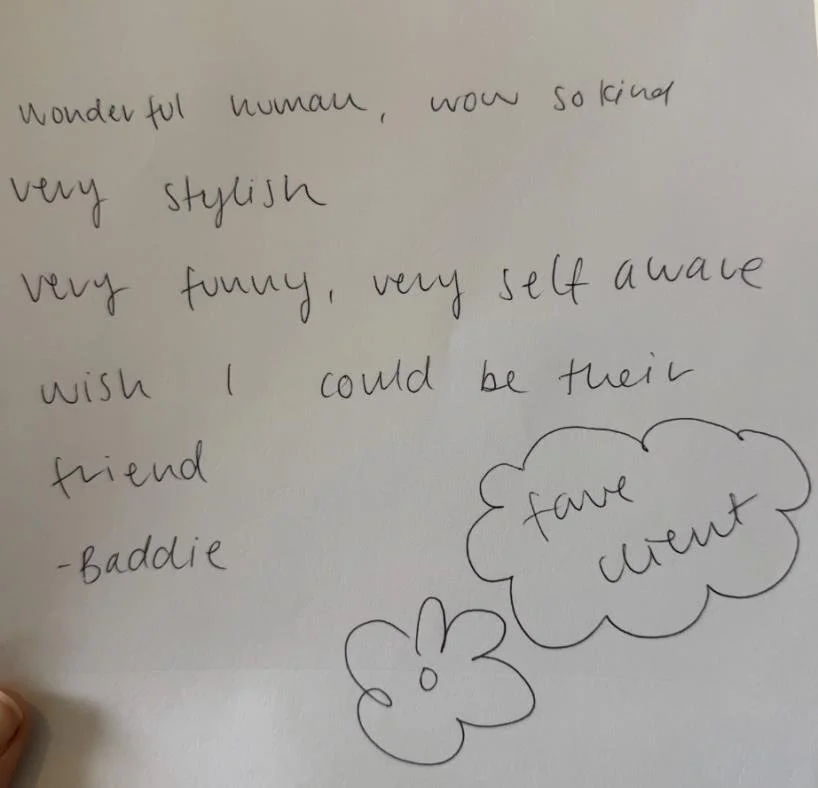
Therapy is unlike most conversations you’ll have. You’re sharing parts of your story that may never have been spoken aloud before. Naturally, seeing your therapist quietly scribbling away can make anyone wonder what’s making it onto the page.
“Did I say something weird? Is she writing that I’m completely bananas?”
I promise: no!
In fact, what I’m writing probably isn’t what you think.
A Little Peek Behind the Curtain
Here’s the secret: I’m rarely writing down exactly what you said.
I’m far more interested in how your story is unfolding. That’s the strategic psychotherapy way.
I might be noting:
The names of important people in your life
The timeline of significant events
The holiday you mentioned in passing, because I know I’ll want to ask how it went next session
The job interview you’re nervous about
The birthday that feels heavy this year
The little details that tell me what matters most to you
I’m Looking for Patterns, Not Problems
I notice themes that gently repeat themselves.
Maybe you’re someone who always puts everyone else first. Perhaps humour arrives the moment things become painful. Maybe your shoulders tense whenever you talk about work, or your breathing changes when a particular person’s name comes up.
None of these observations is “good” or “bad”. They’re simply pieces of information—pieces of your puzzle.
Every person develops ways of navigating life. Some of these patterns have served us beautifully. Others may no longer fit the life we’re trying to build.
My role isn’t to judge those patterns. My role is to become curious about them with you.
Because curiosity changes everything.
One of my favourite words in therapy is curiosity. Not criticism. Not judgement. Curiosity.
When we become curious, we stop asking, “What’s wrong with me?” and start wondering, “Where did my mind learn to do that?”
That tiny shift can change everything.
Why Do I Take Notes?

The notes I write aren’t a scorecard. They’re not a list of everything you’ve done “wrong”, and they’re certainly not a record of whether you’ve been a “good” client.
They’re simply little breadcrumbs that help me remember your story.
Between sessions, I’ll often revisit my notes and reflect on what we’ve explored together. I might notice connections that weren’t obvious in the moment or think of a question I’d like to ask you next time. I may identify a strength you haven’t quite recognised in yourself yet.
That way, when we meet again, I’m not starting from scratch. I’m picking up exactly where your story left off.
If you notice me reaching for my pen, please don’t let your imagination convince you that you’ve said something terrible.
Quite the opposite. Often, it’s because you’ve shared something important—something I’d like to remember and don’t want to lose.
Sometimes it’s a date. Sometimes it’s a feeling. Sometimes it’s a sentence so beautifully honest that I know we’ll come back to it.
There’s No “Too Much”
Therapy isn’t about collecting evidence. It’s about building understanding.
Every note I write is simply another piece of the picture—not to define who you are, but to help me better understand the wonderfully complex human sitting across from me.
You are never a diagnosis. You are not broken beyond repair. You are never “too much”.
You’re a person with a story, looking for a little mending in all the right places.
It’s a privilege to sit across the room from you and help you make sense of what we call life.
If you’ve ever wondered what your therapist is writing, I hope this little peek behind the curtain has eased some of that curiosity.
A Final Thought?
A therapy space should always feel like a place of safety, collaboration and openness.
If you’re ever curious about something I write, something I ask, or why I pause to jot something down, please ask.
Some of the best conversations begin with curiosity.
After all, therapy isn’t something we do to you. It’s something we do with you.
Thankyou
I hope this article has helped you better understand yourself—or someone you care about.
Mental health isn’t about having all the answers. It’s about becoming curious, compassionate and willing to keep learning.
If anything in this article resonated with you, stirred difficult emotions or raised questions you’d like to explore further, please don’t hesitate to reach out. Therapy provides a safe, confidential space to unpack your experiences, develop practical strategies and move towards lasting change.
Remember:
You don’t have to navigate life’s challenges alone.
You’re not broken—but we can all benefit from a little mending.
Talk to me.
These Case Notes aren’t just about sharing information. They’re about building a community of curiosity and open conversations about mental health.
Is there a topic you want explored?
Did this change your ideas?
Do you have questions about mental health, trauma, relationships or wellbeing?
I’d love to hear from you because your ideas will inspire future editions ofCase Notes. All personal information will remain confidential unless you explicitly request otherwise.
Stay curious. Your mind is worth getting to know.
—The Conscious Lioness.